





Approve only the exact chair model, size, and material variant that passes fit checks for every employee group you tested and clears every documentation gap you flagged. Knowing how to run an office chair pilot test before bulk buying turns scattered opinions into a defensible record before committing budget to a bulk order. That structured record, not an individual preference, is what should authorize your purchase order.
Set the Approval Question Before Employees Test a Chair
Before anyone sits down, write one sentence that states the real approval question: is this exact sampled configuration ready for the planned bulk order, not whether people generally like it. Answering the wrong question is an easy way for a pilot to produce a popular result that still fails the buy.
Write the approval brief
List the order decision at stake, the exact candidate model and configuration, the work setting it will serve, and who signs off. A one-page brief prevents the team from testing a slightly different unit than the one that will actually ship.
Set critical criteria before testing
Decide which criteria can block approval on their own, such as lumbar adjustability or seat depth range, and separate them from preferences like color or extra padding that matter less. Set this list before any survey response comes in, so results cannot be reinterpreted to fit a preferred outcome.
Separate product facts from pilot observations
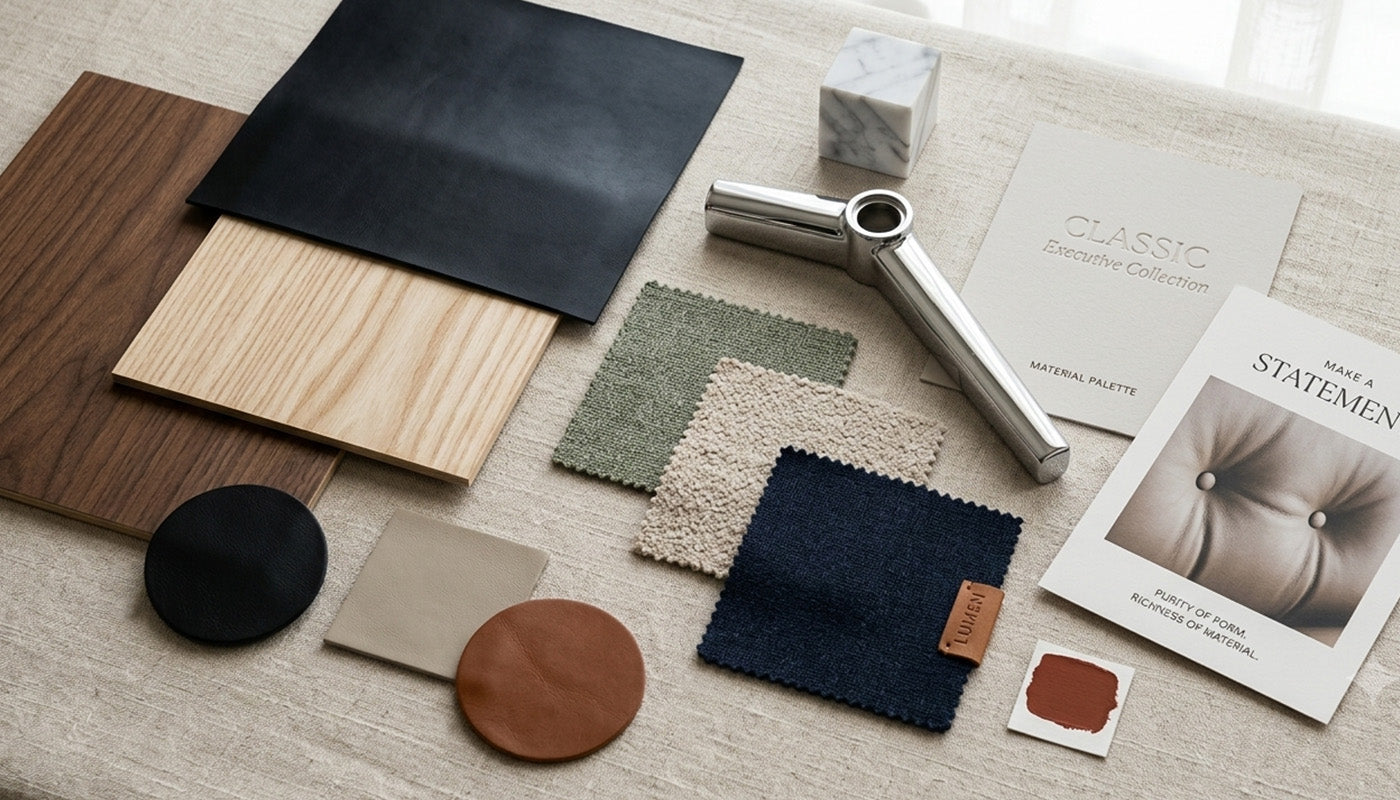
Keep four distinct fields: listed specifications, employee observations, documentary evidence, and unresolved questions. For example, a chair's Nico, Mesh Ergonomic Office Chair listing or an Onyx, Ergonomic Office Chair listing can tell you the model code, seat-depth range, arm type, and material, but only the pilot can tell you whether that configuration actually fits your teams. Trying different chairs before buying is a reasonable basis for this kind of trial because fit depends heavily on the individual user and how the chair adjusts to them.
Build an Unbiased Employee Evaluation Survey
The survey should score observable facts, not overall impressions. A short table with anchored 1-5 descriptions keeps every participant answering the same underlying question in the same way.
Use neutral prompts and anchored scores
Write each score level as a description of what happened, not a feeling. For lumbar support, a 5 might mean "backrest and lumbar depth positioned without forcing an awkward posture," while a 1 means "no adjustment removed the pressure point." OSHA's seating guidance frames the same underlying checks: seat width and depth should fit the individual user, and armrests should be adjustable enough to support both forearms during normal computer tasks. Building the OSHA seating checklist criteria into your anchors keeps the survey grounded in observable fit rather than vague comfort.
Capture context with every response
Ask each participant to record their fit group, the workstation used, which adjustments they tried, the task they performed, and one comment tied to that task. Context turns a bare number into something you can act on later if a group-specific issue shows up.

| Criterion | Observable prompt | Anchored 1-5 description |
|---|---|---|
| Lumbar support | Can you position the lumbar/backrest without awkward posture? | 5 = fits without strain, 1 = no setting removes pressure |
| Seat-pan depth | Can you sit fully back with thigh support and no edge pressure? | 5 = full support, 1 = persistent edge pressure |
| Armrest adjustability | Does the armrest support your forearm without desk interference? | 5 = supports task, 1 = interferes or can't reach the surface |
| Overall fit during tasks | Does the chair support your normal work tasks overall? | 5 = fully supports, 1 = repeatedly distracting |
| Mesh/material condition | Any visible wear, sagging, or fraying after use? | 5 = no visible change, 1 = visible damage |
These scores describe the pilot experience only; they do not prove long-term performance on their own.
Keep overall fit from hiding a critical failure
Require reviewers to check each criterion row before accepting a favorable overall-fit score. A chair can average well while still failing a critical seat-depth requirement for one fit group, and that failure should stop the approval regardless of the overall number.
Standardize the Chair Trial for Comparable Results
Give every participant the same starting chair, the same instructions, and the same task, so any score difference reflects the chair and the user rather than an inconsistent setup.
Record the starting configuration
Confirm the sample matches the intended order configuration, note assembly status, and log the initial seat height, depth, lumbar tension, recline, and armrest position along with desk and monitor height. If someone changes a setting mid-trial, record it instead of quietly resetting it.
Give every participant the same trial brief
Use one short, neutral orientation script, the same task scenario, and the same survey timing for everyone. Do not hint at which chair the team prefers. OSHA's chair guidance supports trying different chairs before purchase because a seat pan that is depth-adjustable can support both taller and shorter users, and armrests positioned correctly keep the upper arm close to the torso; standardizing instructions is what lets those adjustment checks produce comparable results across people. Review the OSHA chair-fit guidance sections on backrest, seat, and armrest fit when writing the orientation script.
Collect repeated observations
Have each participant use the chair for normal work across the agreed trial window and log any changes, unresolved discomfort, or task friction as they occur rather than relying on a single end-of-trial memory. Repeated observation within a defined window gives more reliable signal than one sitting.
Test Fit, Adjustability, and Mesh Without Overclaiming
Each criterion needs its own test-and-evidence path: employees observe fit, and your team separately verifies any durability or standards claim with documentation.
Evaluate lumbar and seat-pan fit
Record whether the lumbar adjustment removes back pressure without forcing an unusual posture, and whether the seat pan lets the user sit fully back while supporting the thighs without edge pressure. Note the adjustment range actually used, since a chair with a wide range can still fail if the range doesn't reach a specific user's need.
Evaluate armrest adjustability in the workstation
Check whether height, width, and angle adjustments support the forearm during the assigned task without hitting the desk edge or blocking keyboard access. An armrest that fits in isolation can still fail once it's placed at a real desk.
Treat mesh condition as an evidence question
Log visible mesh or upholstery condition, damage, sagging, or fraying, and how the material responded to normal cleaning during the trial. A pilot can observe short-term condition, but it cannot by itself prove long-term durability, emissions performance, or compliance with a specific standard. BIFMA publishes standards covering general-purpose office chair testing, VOC emissions, and cleaning or disinfecting durability, and those BIFMA standards descriptions are useful for identifying which document to request from a manufacturer, not for confirming that an untested model already complies. Treat a missing exact-variant document as a reason to revise or extend the pilot, not as proof the chair passed or failed.
Manage Samples and the Pilot Record
Every sample unit needs an owner, a status, and a paper trail so the final decision can be reviewed later.
- Before requesting samples: confirm the exact candidate identity and order configuration, quantities, decision owner, target dates, and any written commercial terms for the sample order.
- On receipt and staging: record delivery condition, assembly completion, missing parts or damage, and who has custody of each unit.
- During the trial: track configuration changes, cleaning events, and the participant schedule so every planned fit group actually completes its session.
- After the decision: record disposition of each sample unit, file the approval evidence and unresolved questions, and note any supplier confirmation received.
Retail promotions, return windows, or shipping terms that apply to individual orders do not automatically apply to a commercial sample or bulk order. Confirm delivery, return, exchange, and disposition terms in writing for the specific sample arrangement before you request units.
Analyze the Results and Choose Go, Revise, Reject, or Extend
Compare the pre-set criteria against results from each fit group before looking at the overall average, since an average can hide a group-specific failure that should block approval.

Compare results by fit group
Review scores and comments separately for each pre-defined fit or work-use group. A chair that scores well for one body type or task pattern but poorly for another needs a group-specific note, not a single blended score.
Apply the pre-set decision rules
Check whether any critical criterion failed its threshold, and if so, determine whether the cause was the chair itself, a setup inconsistency, or a survey design issue. Do not adjust the threshold after seeing the results; if the rule needs to change, document that as a protocol revision, not a scoring fix.
Record the decision and next action
Choose one outcome for the exact sampled configuration: approve the chair if every critical threshold is satisfied, revise the model or trial setup if an issue is fixable, reject it if it fails core needs, or extend the evaluation window if participant coverage is incomplete. Assign an owner, rationale, and due date to whichever outcome you choose, so the bulk order decision has a written record behind it. If your team wants to compare additional variants at this stage, a professional bulk-procurement or sample-request inquiry can help confirm configuration and lead-time details before you finalize the order.
FAQs
How many employees should participate in an office chair pilot?
There's no universal participant count that fits every pilot. Instead, choose enough participants to cover each pre-defined fit and work-use group with a minimum number of completed responses per group, and extend the trial if a critical group ends up underrepresented.
What is the recommended duration for an office chair trial?
No single duration is broadly supported for every workplace. Set a fixed trial window long enough to capture repeated normal work use, record the start and end dates in the pilot record, and require the planned observations to be logged before the team makes a decision.
How should we handle returns or exchanges for sample units?
Confirm the applicable commercial terms in writing before ordering samples, including eligibility, shipping responsibility, condition requirements, fees, and deadlines. If your supplier hasn't confirmed these terms for the sample order, record them as unresolved rather than assuming standard retail return or exchange policies apply.



Leave a comment
This site is protected by hCaptcha and the hCaptcha Privacy Policy and Terms of Service apply.